


Twelfth Night and The Blessing of the Floats
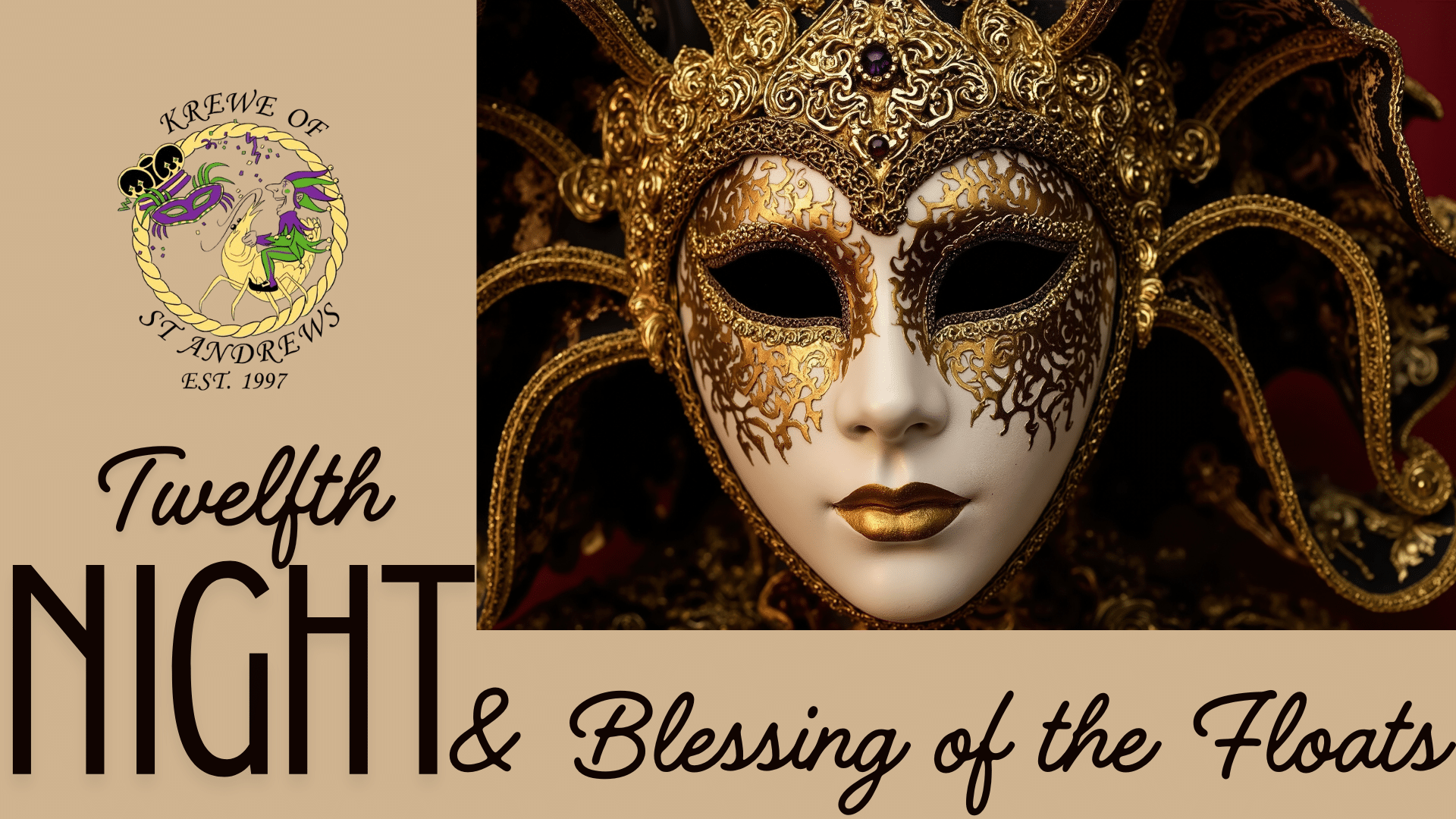
Twelfth Night Celebration
Twelfth Night will be celebrated on January 9, 2026, at the KoSA Event Center. Doors will open at 5:30 PM, with dinner served promptly at 6:30 PM. Announcements, the Blessing of the Floats, and the ceremonial cutting of the King Cake will follow.
There is no cost for members or guests to attend. All expenses for this event are graciously covered by the KoSA Ambassadors. A cash bar will be available throughout the evening.
Each float is asked to offer a small treat for guests during the Blessing of the Floats. These offerings are intended as a symbolic gesture of hospitality and tradition.
Please RSVP below.
History of Twelfth Night in Mardi Gras Tradition
Twelfth Night, observed on January 6th, has long been recognized as the official beginning of Carnival season in regions that celebrate Mardi Gras, especially along the Gulf Coast.
Origins
-
The date comes from Christian tradition: it is the twelfth night after Christmas, marking the Feast of the Epiphany, when the Three Kings were said to have visited the Christ child.
-
Because of its connection to the “Kings,” this day later inspired the king cake, which became one of the most iconic symbols of Mardi Gras.
Early Carnival Associations
-
In European Carnival traditions, January 6th marked the start of weeks of celebration leading up to Lent.
-
When French and Spanish settlers brought these customs to Louisiana and the Gulf Coast, Twelfth Night became the ceremonial opening of the Mardi Gras season in America.
-
Some of the oldest krewes, including the Twelfth Night Revelers (founded 1870) in New Orleans, built their entire identity around this date.
Traditional Customs
-
King cake is first served on Twelfth Night, and many believe it is bad luck to eat it before January 6th.
-
Balls and masquerade celebrations historically began on this night, introducing themes, characters, or royalty for the season.
-
In many cities, Twelfth Night is marked by parades or formal gatherings to “open” the season, symbolizing the shift from the holidays into Carnival.
Why It Matters Today
-
The date remains the universally accepted start of Mardi Gras, followed by weeks of parades, balls, and krewe events until Fat Tuesday.
-
It ties modern celebrations to centuries-old European and Gulf Coast customs, making it one of the most important evenings in the Carnival calendar.